
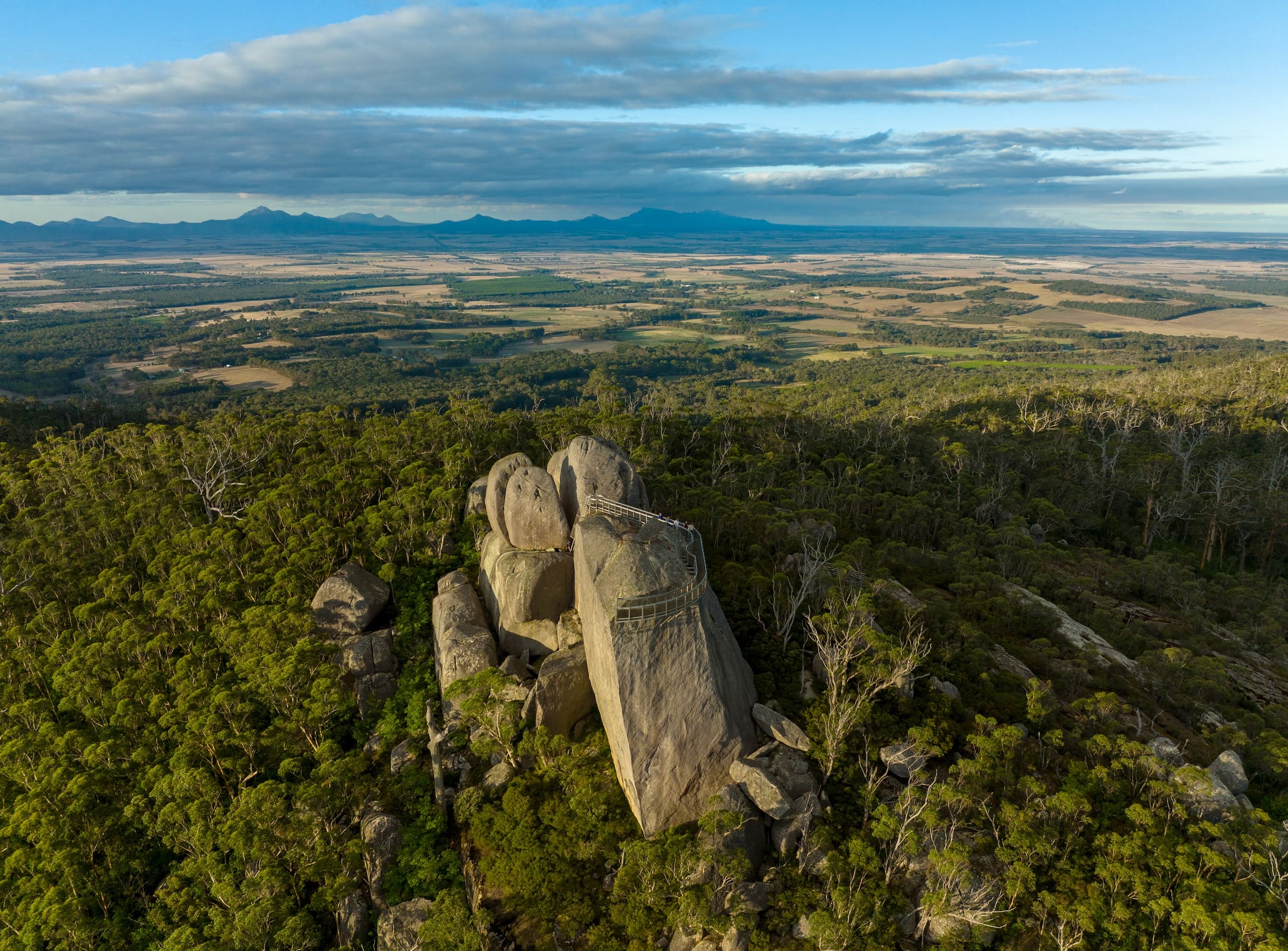
A local guide
Why Spring 2026 Is Shaping Up as a Cracker Year to Climb the Granite Skywalk
Every guide who’s spent a season walking the Castle Rock Trail will tell you the same thing: a wet winter changes everything that follows. And this year, the Porongurups have had a wet one. Good soaking rain through...
Published 5 October 2026
Every guide who’s spent a season walking the Castle Rock Trail will tell you the same thing: a wet winter changes everything that follows. And this year, the Porongurups have had a wet one. Good soaking rain through winter, falling steadily rather than all at once, is exactly what native flora in this part of the Great Southern needs to put on its best show. If you’re weighing up when to book your Granite Skywalk tour, spring 2026 is looking like one to move on quickly.
We’ve covered the full climb, from the Castle Rock car park to the six-metre ladder and the platform itself, in our complete Granite Skywalk guide. This one is about timing: why this particular spring is worth prioritising, what’s already flowering on the trail, and how to read the Porongurup weather before you climb.
A Wet Winter Sets the Stage
The Porongurup Range creates its own microclimate, catching more rainfall than the surrounding farmland thanks to its height and position. This winter has delivered on that reputation, with steady falls soaking deep into the granite soils that support the range’s ancient jarrah and karri forest. That matters more than it might sound. Wildflowers here rely on stored winter moisture to carry them through the flowering months, and a dry winter almost always means a shorter, patchier spring. A wet one tends to mean the opposite: longer flowering windows and a wider spread of species blooming at once.
Local growers and bushwalkers alike are already talking about it as a promising season. None of this is guaranteed, of course. Weather in the Great Southern rarely follows a script. But the early signs point to a spring worth building a trip around.
What's Flowering on the Climb This Year
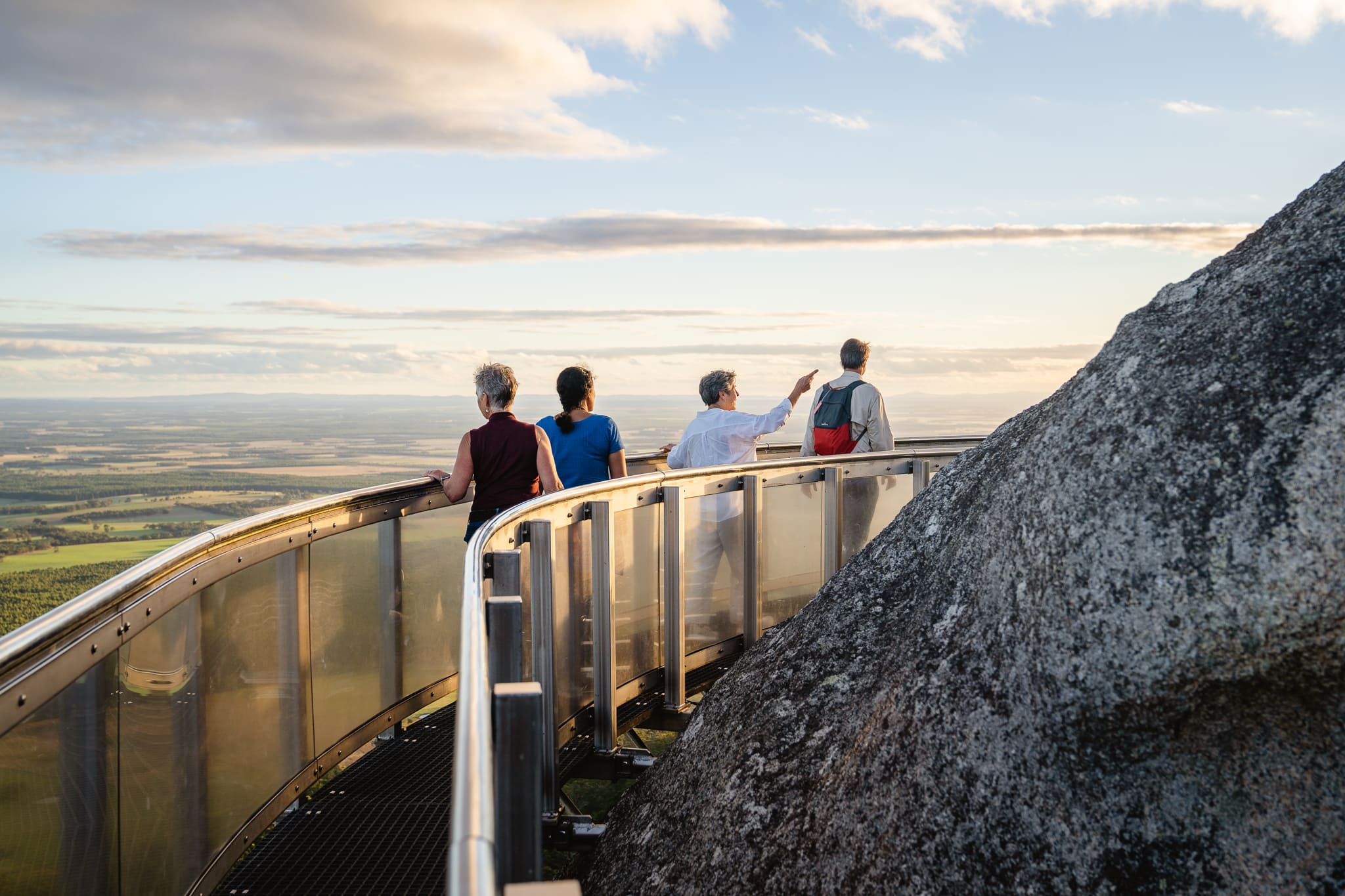
The Castle Rock Trail runs through diverse habitat on its way to the summit, and each section brings something different into view. In the lower forest, keep an eye out for hovea, its small purple pea flowers scattered low along the track edges. As the trail climbs and the granite starts to dominate, candlestick banksias take over, their upright yellow spikes standing out against the grey rock.
Look closer to the ground on the exposed granite sections and you’ll likely spot purple enamel orchids, along with the odd flag iris pushing up through cracks in the stone. Hardenbergia, with its cascading purple flowers, often drapes over boulders near the Balancing Rock, adding a splash of colour to one of the trail’s most photographed spots. None of these plants need a botanist’s eye to appreciate. They’re simply part of the scenery on the way to the summit, and in a good season like this one, there’s more of them than usual to notice.
Our guides walk this track constantly through spring, so if a particular gully or ledge is putting on a better show than usual, they’ll know about it before most visitors do.
Reading Porongurup Weather Before You Climb
Spring weather in the Porongurups can shift quickly, sometimes within the same morning. Mornings often start cool and clear, only for cloud to roll in by midday, or for a burst of wind to pick up once you’re on the exposed granite near the summit. Layered clothing is worth packing even if the forecast looks mild, along with a light rain jacket tucked into your bag rather than left in the car.
It’s worth checking the Bureau of Meteorology’s Albany forecastthe night before your climb, though remember the Porongurups can run several degrees cooler and wetter than town, given their elevation and the range’s own weather patterns. Tours run in most conditions, and only heavy rain or genuinely unsafe wind sees a reschedule. A grey morning is often the best kind for photography anyway, since it softens the harsh midday light that can wash out wildflower colours.
Making the Most of a Bumper Season
If this season is as strong as the early signs suggest, tours during peak spring weeks are likely to book out faster than usual. Getting in early gives you the best chance of a date that suits, and it also means less disappointment if a particular week turns out to be the standout one for flowering.
For the full trail breakdown, packing list, and what’s included in the tour itself, our complete Granite Skywalk guidecovers everything in detail. If you’re planning your trip around the wider wildflower calendar rather than just this one climb, our Albany wildflower season guidesets out the broader picture across the region, and the Department of Biodiversity, Conservation and Attractions’ Porongurup National Park pagehas current park notices worth checking before you travel.
Ending With Wine, As It Should
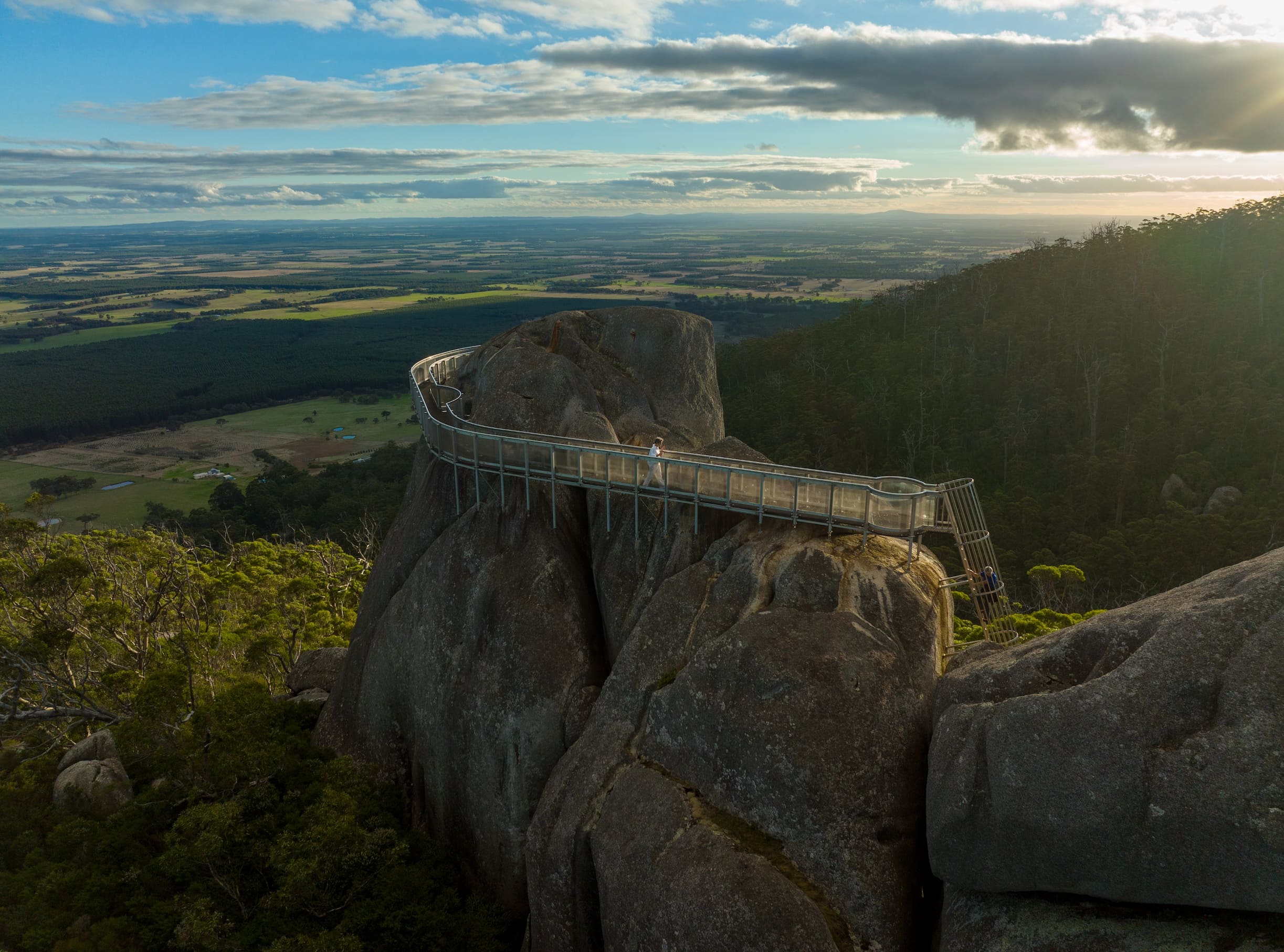
After the descent, most of our Granite Skywalk tours finish at a Porongurup winery, and a good spring season doesn’t only show up in the wildflowers. The same rain that feeds the orchids and banksias also feeds the vines, and local winemakers are watching this season with the same interest as the bushwalkers. There’s something fitting about finishing a climb through a bumper wildflower spring with a glass of the region’s cool-climate Riesling, looking back at the granite peak you’ve just come down from.
Spring doesn’t wait around in the Porongurups, and a season like this one tends to be talked about for years afterwards by those who got out and saw it. If you’ve been meaning to tick the Granite Skywalk off your list, this is the year to bring that plan forward. Book your Granite Skywalk tourand see this spring for yourself.
See Albany with a local
Turn the places in this guide into a connected, thoughtfully hosted day.
Explore Albany tours